
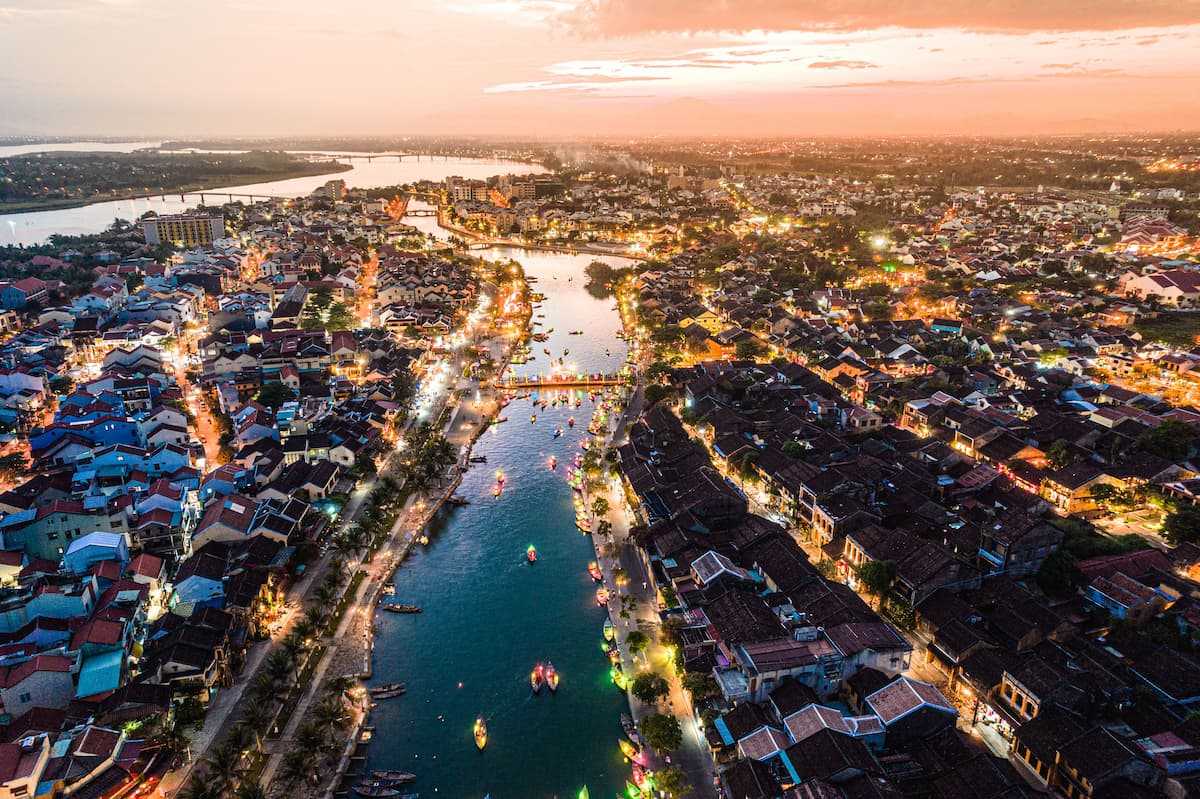
Exploring Hoi An: Vietnam’s Historic Riverside Town
Hoi An is one of Vietnam’s most visited destinations, drawing travellers with its beautifully preserved Old Town, colourful lanterns, riverside setting and rich trading history. Designated as a UNESCO World Heritage Site, the town offers a slower pace than many of Vietnam’s larger cities, where centuries-old merchant houses, local markets, traditional cuisine and everyday life exist alongside a thriving tourism industry.
While many visitors come to experience Hoi An’s famous attractions, the town’s character has been shaped by far more than its landmarks. Its location on the Thu Bồn River, centuries as an international trading port, annual flood seasons and ongoing role as a living community have all influenced the way Hoi An has developed and continues to evolve today.
In this guide, we’ll be exploring Hoi An highlights that make Hoi An one of Vietnam’s most rewarding destinations, examine some of the history, culture and everyday life that continue to shape the town, and finish with travel photography ideas that capture not only Hoi An’s iconic scenes, but also the details that help tell the story of this remarkable place.
Experience Hoi An
Every traveller experiences Hoi An differently, and there is no single “right” way to explore the town. Some visitors spend days wandering the Ancient Town, while others come for the food, beaches or the opportunity to have clothing tailored.
Rather than trying to list every attraction, these are the experiences we believe best capture the character of Hoi An. Together they offer an introduction to the town’s history, culture, everyday life and the moments that make it one of Vietnam’s most memorable destinations.
Discover Hoi An’s Food Culture
Hoi An’s food scene is one of the town’s greatest attractions, blending generations of local tradition with influences from the merchants and communities that once traded through its busy port. From lively markets and small family-run restaurants to quiet cafés tucked into narrow laneways, eating here is as much about experiencing the town’s culture as it is enjoying a good meal.
No dish is more closely associated with Hoi An than Cao Lầu. With its distinctive chewy noodles, slices of pork, fresh herbs and crisp rice crackers, it has become a meal that many visitors remember long after their journey ends. While you’ll find excellent Vietnamese food throughout the town, trying Cao Lầu offers a connection to Hoi An that cannot easily be found elsewhere.
Beyond its signature dish, Hoi An rewards travellers who are willing to explore. Morning markets, riverside eateries and modest local restaurants often provide some of the most memorable meals, offering a chance to experience the flavours and hospitality that remain part of everyday life. Whether you’re sitting on a small plastic stool beside a local food stall or enjoying dinner overlooking the Thu Bồn River, food is one of the easiest ways to connect with the character of the town.
As with much of Hoi An, the story behind the food is just as interesting as the meal itself. Later in this guide, we’ll explore why dishes such as Cao Lầu have become so closely tied to the town’s history and identity.
Have Clothing Tailored
Few destinations are as closely associated with tailoring as Hoi An. Throughout the Ancient Town and its surrounding streets, hundreds of tailoring shops offer everything from simple alterations to custom-made suits, dresses and shoes. For many visitors, having clothing made becomes one of the defining memories of their time in Hoi An.
The process is surprisingly straightforward. After choosing a style and fabric, measurements are taken before skilled tailors begin creating a garment designed specifically for you. Depending on the complexity of the piece, many orders can be completed within a few days, with fittings allowing adjustments before the finished clothing is collected.
Quality, craftsmanship and pricing vary considerably between tailors, so spending a little time comparing shops and discussing your expectations is worthwhile. Looking beyond the showroom can also be rewarding. Rolls of colourful fabric, experienced tailors carefully hand-finishing garments and the quiet concentration inside busy workshops offer a glimpse into the craft that has helped define Hoi An’s reputation for generations.
Tailoring is more than a convenient way to have clothing made while travelling. It reflects a long tradition of craftsmanship that continues to shape the town today. Later in this guide, we’ll explore how tailoring became one of Hoi An’s defining industries and why it remains such an important part of the town’s identity.
Explore the Coconut Forest by Basket Boat
Just a short drive from the Ancient Town, the Bay Mau Coconut Forest offers a very different perspective on Hoi An. Narrow waterways wind through dense stands of nipa palms, where traditional round basket boats have been used by local communities for generations. Today, the area has become one of Hoi An’s most popular visitor experiences, combining local history with a lively and entertaining boat ride.
Many tours include demonstrations of traditional rowing techniques, basket boat spinning and short performances along the waterways. While these displays are clearly designed with visitors in mind, they also introduce travellers to a style of boat that has long been part of life in central Vietnam. The atmosphere is often energetic, making it a very different experience from the quieter streets of the Ancient Town.

For those looking beyond the entertainment, the surrounding waterways reveal another side of Hoi An’s landscape. The dense coconut palms, quiet canals and fishing activity provide a glimpse into the environment that supported local communities long before tourism arrived. Spending time observing these details often leaves as strong an impression as the boat ride itself.
Whether you visit for the experience, the scenery or simply to see a different side of Hoi An, the Coconut Forest provides an enjoyable contrast to the town’s historic centre and adds another layer to understanding the region beyond its famous lantern-lined streets.
Relax at An Bang Beach
Although Hoi An is best known for its historic streets and cultural heritage, the coastline lies only a short distance from the Ancient Town. An Bang Beach provides a welcome change of pace, offering a wide stretch of sand where visitors can spend a few quiet hours between exploring the town’s markets, temples and laneways.
The atmosphere is relaxed rather than energetic. Beachfront cafés and restaurants line the shore, creating an easy place to enjoy fresh seafood, a coffee or simply watch the waves roll in. Some travellers visit for a morning swim before returning to the Ancient Town, while others choose to spend an afternoon here before heading back in time for the evening lanterns.
Unlike many of Southeast Asia’s island beaches, An Bang is not the main reason people visit Hoi An. Instead, it complements the destination, adding another dimension to a stay that already combines history, culture, food and local traditions. Having the beach so close means visitors never have to choose between a cultural experience and time by the sea.
Like much of Hoi An, An Bang is best enjoyed without rushing. Whether you spend an hour walking the shoreline or linger over lunch with the sound of the waves in the background, it provides a gentle reminder that some of the most memorable travel experiences come from slowing down rather than filling every moment with activity.
What Shapes Hoi An
Every destination is shaped by more than its attractions. The places we visit today are the result of geography, history, culture and the people who have lived there over generations. Hoi An is no different. Understanding these influences not only provides a deeper appreciation of the town but also explains why it feels so distinctive compared with anywhere else in Vietnam.
These are some of the stories that have helped shape Hoi An into the destination visitors experience today.
A Trading Port That Connected the World
Long before Hoi An became one of Vietnam’s most popular tourist destinations, it was one of Southeast Asia’s busiest trading ports. From the 15th to the 19th centuries, merchant ships from China, Japan, Europe and other parts of Asia arrived along the Thu Bồn River, exchanging goods, ideas and traditions that would leave a lasting mark on the town.
Unlike many historic settlements, Hoi An’s international connections can still be seen today. Chinese assembly halls, Japanese influences, traditional Vietnamese architecture and European design elements exist side by side, reflecting centuries of cultural exchange rather than the dominance of a single community. Walking through the Ancient Town is, in many ways, walking through the history of these relationships.
Trade brought prosperity, but it also shaped everyday life. Families built merchant houses that combined business with living spaces, communities established temples and meeting halls, and crafts developed to support the growing port. Although the river is quieter today, much of the town’s layout and character still reflect its years as one of the region’s great commercial centres.
Understanding Hoi An as a trading port changes the way you experience it. The colourful streets, historic buildings and riverside setting become more than attractive scenery; they become evidence of a town whose identity was built through centuries of exchange between cultures from across Asia and beyond.
The River That Built the Town
It is easy to think of the Thu Bồn River as little more than a scenic backdrop to Hoi An’s waterfront cafés and colourful lanterns. In reality, the river is the reason the town exists. For centuries it served as the gateway between the South China Sea and inland Vietnam, allowing merchant ships to reach Hoi An and transforming what might otherwise have remained a small riverside settlement into one of Southeast Asia’s most important trading ports.
The river shaped almost every aspect of the town’s development. Goods arrived along its waters, merchants established businesses on its banks and communities grew around the opportunities that trade created. Even today, the layout of the Ancient Town reflects its close relationship with the river, with many of its oldest buildings oriented towards the waterfront where commercial life once flourished.
Although international trade gradually declined, the river remains central to daily life. Fishing boats still work its waters, locals continue to travel along it, and visitors gather on its banks from sunrise through to the lantern-lit evenings. The purpose of the river may have changed, but its importance to the character of Hoi An has not.
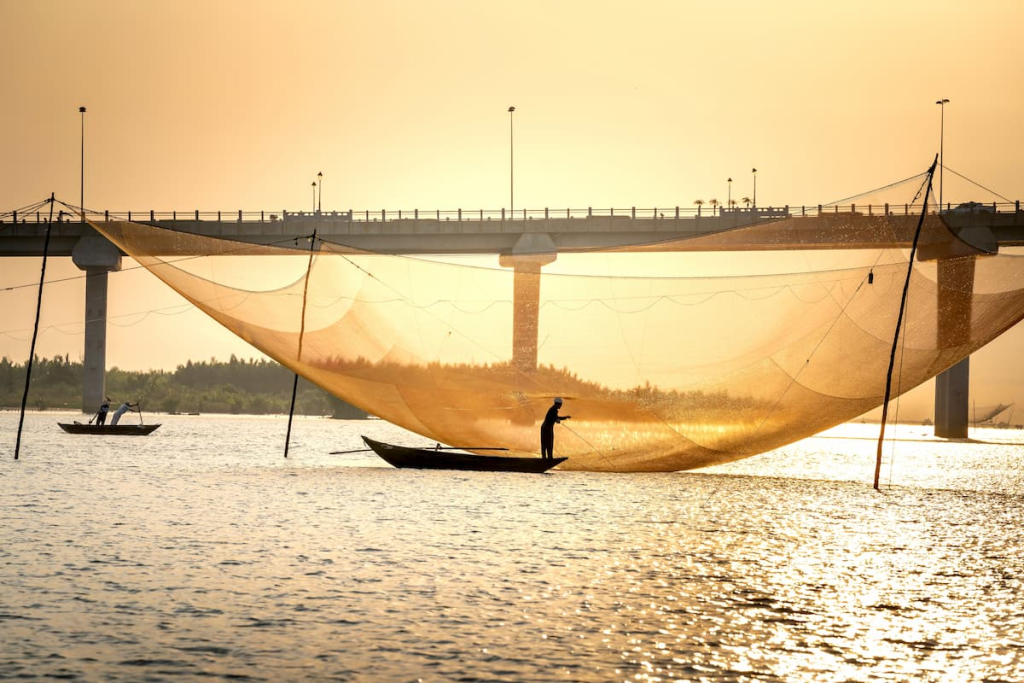
When you stand beside the Thu Bồn River today, you are looking at more than a beautiful view. You are looking at the natural feature that made Hoi An possible. Understanding that simple fact changes the way the entire town is seen, turning the waterfront from a picturesque setting into the foundation of Hoi An’s history.
Living With Seasonal Floods
For much of the year, Hoi An appears calm and timeless. Yet during the annual wet season, the Thu Bồn River can rise dramatically, flooding streets throughout the Ancient Town. What may seem like an occasional natural disaster to visitors is, for local residents, a familiar part of life that has shaped the town for generations.
Rather than resisting the river, Hoi An has learned to live with it. Many historic buildings were designed with flooding in mind, incorporating raised thresholds, sturdy timber construction and upper floors where valuable belongings could be moved when the water rose. Even today, it is not unusual to find flood markers on old walls, quietly recording the height of past inundations and reminding visitors that the town has weathered these events many times before.
The floods can be disruptive, but they have also played a role in preserving Hoi An’s identity. Regular restoration, careful maintenance and a deep understanding of the river have helped protect the Ancient Town while allowing it to remain a living community rather than simply a historic attraction.
As you explore Hoi An, look beyond the lanterns and colourful façades. The elevated doorways, weathered timber, high-water marks and resilient architecture tell another story—one of adaptation. They reveal how generations of residents have worked with the river rather than against it, shaping a town that continues to endure despite the challenges of living beside one of central Vietnam’s great waterways.
A Town That Still Lives Its Traditions
One of Hoi An’s greatest strengths is that it remains more than a historic destination. Behind the preserved shopfronts and popular attractions is a town where people continue to live, work and maintain traditions that have been passed from one generation to the next. While tourism has become an important part of the local economy, everyday life continues alongside it.
This can be seen throughout the town. Markets open early to serve local residents before many visitors have left their hotels. Tailors continue to practise skills developed over decades, family-run restaurants prepare recipes handed down through generations and small temples remain active places of worship rather than simply historic landmarks. These everyday moments give Hoi An much of its character.
The balance between welcoming visitors and preserving local identity is not always simple, and like many popular destinations Hoi An continues to evolve. New cafés, boutique hotels and modern businesses now sit alongside centuries-old merchant houses. Yet despite these changes, the town has retained a strong sense of place, where history is not confined to museums but remains woven into daily life.
Perhaps this is what leaves the strongest impression on many travellers. Hoi An is remembered not only for its lanterns or historic streets, but for the feeling that the town is still being lived in. Spend time observing the quieter moments away from the busiest corners, and you’ll discover that the character of Hoi An is found just as much in its people and daily routines as it is in its famous landmarks.
Understanding Hoi An
Hoi An is full of experiences that have become synonymous with the town. Lanterns illuminate the streets each evening, tailoring shops line the laneways, Cao Lầu appears on almost every menu and basket boats drift through the Coconut Forest. While these experiences are easy to enjoy, understanding why they became part of Hoi An’s identity adds another layer to visiting the town.
Behind each is a story shaped by centuries of trade, local traditions, geography and the people who have called Hoi An home. Exploring these stories not only helps explain what makes Hoi An different from elsewhere in Vietnam, but also reveals why these experiences continue to define the town today.
Why Is the Ancient Town Covered in Lanterns?
As daylight fades, Hoi An undergoes one of its most recognisable transformations. Hundreds of colourful silk lanterns illuminate the streets, reflecting across the Thu Bồn River and creating the image that has become synonymous with the town. For many visitors, this evening display is one of the defining memories of Hoi An.
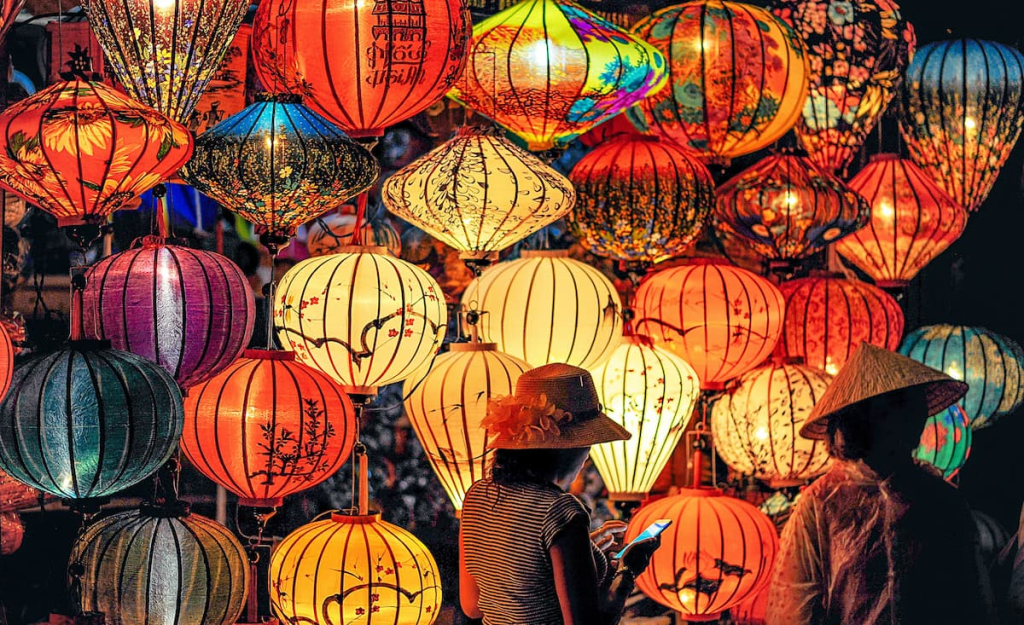
Lanterns have long been part of Hoi An’s cultural heritage, influenced by the Chinese merchants who settled here during the town’s years as an international trading port. In Chinese tradition, lanterns symbolise prosperity, happiness and good fortune, and over time they became an important feature of festivals, family celebrations and public spaces throughout Hoi An.
Today, lanterns remain woven into everyday life, but tourism has also played a role in elevating them into the town’s defining visual symbol. Each month, during the Hoi An Lantern Festival, electric lights within parts of the Ancient Town are dimmed as thousands of traditional lanterns illuminate the streets. While the festival offers the most atmospheric experience, lanterns can be enjoyed throughout the year, making them one of the few attractions that continue to shape Hoi An’s identity every evening.
Understanding this history changes the way you see the town after dark. Rather than simply decorating the streets for visitors, the lanterns reflect Hoi An’s long relationship with Chinese culture, its trading heritage and traditions that continue to be celebrated today. They are not just beautiful—they have become one of the most recognisable expressions of the town’s history and identity.
Why Is Hoi An Famous for Tailoring?
Custom tailoring can be found throughout Asia. Cities such as Hong Kong, Bangkok and Singapore have long-established reputations for producing quality made-to-measure clothing, so it is reasonable to ask why Hoi An has become one of the region’s most celebrated tailoring destinations.
The answer begins with Hoi An’s history. During its centuries as one of Southeast Asia’s most important trading ports, merchant ships travelling the maritime Silk Road brought fine silks, cottons, dyes and textiles from across Asia to the town. Access to these materials, combined with influences from Chinese, Japanese and European merchants, helped establish a thriving community of textile merchants, tailors and skilled craftspeople. Over generations, tailoring became more than a trade; it became part of Hoi An’s identity, with knowledge and techniques often passed down through families.
While this heritage laid the foundation, it is the experience of having clothing made that continues to set Hoi An apart today. In many large cities, tailoring is often a straightforward commercial transaction. Measurements are taken, fabrics are selected and the finished garment is collected a short time later. In Hoi An, the process is often far more personal. Customers typically work closely with their tailor, discussing styles, fabrics, linings, buttons and finishing details before returning for one or more fittings as the garment gradually takes shape. Rather than simply buying a suit, many visitors feel they are participating in the craft itself.
Hoi An has also refined the balance between traditional craftsmanship and remarkable efficiency. Behind the tailor taking your measurements is often a highly organised workshop of specialist pattern makers, cutters, seamstresses and finishers, each contributing to the final garment. This collaborative approach allows complex garments to be completed within just a few days without sacrificing the attention to detail for which the town has become known.
Perhaps that is why so many travellers recommend having clothing tailored in Hoi An even if they have visited other tailoring destinations throughout Asia. It is not simply because the garments can be produced quickly, nor because they are competitively priced. It is because the experience combines generations of craftsmanship, personal collaboration and skilled workmanship in a way that has become uniquely associated with Hoi An. Long after the journey ends, many visitors remember not only the suit or dress they took home, but also the people who helped create it.
What Makes Cao Lầu Unique?
Every destination has a signature dish, but few are as closely tied to one place as Cao Lầu is to Hoi An. Served with thick noodles, slices of pork, fresh herbs, crisp croutons and only a small amount of rich broth, it looks unlike the noodle soups found elsewhere in Vietnam. While many restaurants across the country attempt to recreate it, Cao Lầu remains a dish that is most closely associated with Hoi An itself.
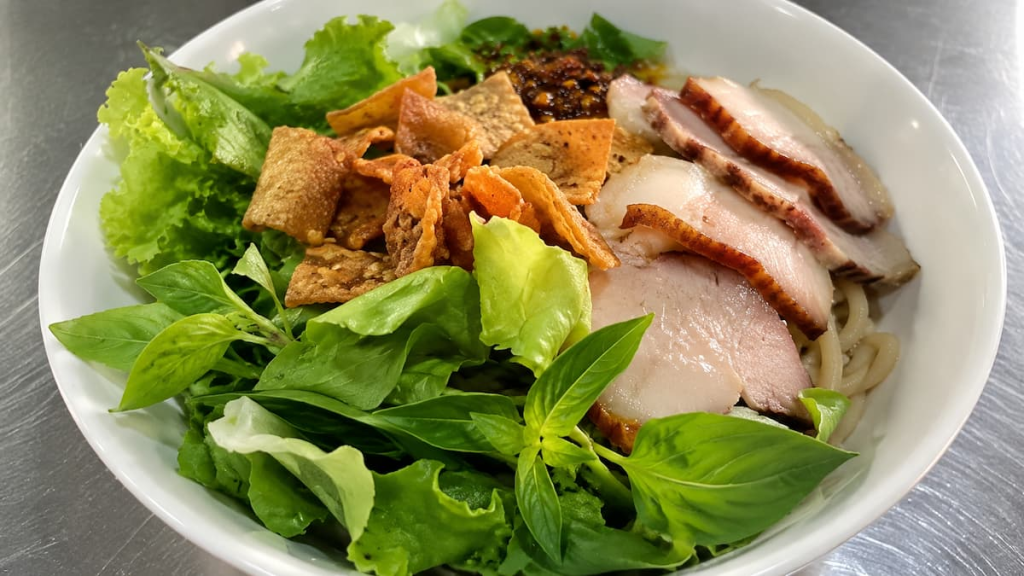
Its origins reflect the town’s history as an international trading port. Over centuries, Chinese and Japanese merchants introduced new ingredients, cooking methods and culinary traditions that blended with local Vietnamese flavours. The result was a dish unlike any other in the region, combining influences from several cultures into something uniquely Hoi An.
One of the enduring stories surrounding Cao Lầu is its connection to the ancient Ba Le Well. Local tradition holds that the well’s mineral-rich water gives the noodles their distinctive texture and flavour, and many long-established restaurants continue to source water from it today. Whether this alone defines the dish is open to debate, but the story reflects how closely Cao Lầu has become intertwined with the town’s identity and heritage.
Perhaps more important than any single ingredient is the fact that Cao Lầu has never become a truly regional dish. Unlike pho or bánh mì, which spread throughout Vietnam and eventually around the world, Cao Lầu has remained rooted in Hoi An. Its ingredients, traditions and preparation are closely connected to the town where it was created, making it one of the few dishes that genuinely feels inseparable from its place of origin.
Eating Cao Lầu is therefore more than trying a local speciality. It is experiencing a recipe shaped by centuries of trade, cultural exchange and local tradition, preserved by generations of cooks who continue to prepare one of Hoi An’s most distinctive culinary traditions.
Why Are Basket Boats Part of Life Around Hoi An?
For many visitors, a ride through the Coconut Forest in a traditional basket boat is one of Hoi An’s most memorable experiences. The circular boats drift through narrow waterways lined with nipa palms, while local boatmen demonstrate remarkable skill by steering with a single paddle or spinning the boats across the water. It has become one of the region’s signature attractions, but these unusual vessels were never created for tourism.
Basket boats, known locally as thúng chai, were developed by fishing communities along Vietnam’s central coast as a practical solution to working in shallow rivers, estuaries and protected coastal waters. Their lightweight woven construction made them inexpensive to build, easy to manoeuvre and well suited to navigating places where larger wooden boats struggled. Local tradition also tells of fishermen using basket boats to avoid taxes imposed on larger vessels during the French colonial period, although historians continue to debate how significant this was in their widespread adoption.
Around Hoi An, the extensive Coconut Forest near Cẩm Thanh provided an ideal environment for these boats. For generations, fishermen used them to access fishing grounds, transport nets and move quietly through the narrow waterways beneath the palms. Long before visitors arrived with cameras, these waterways formed part of everyday working life for local families.
Today, tourism has transformed the Coconut Forest into one of Hoi An’s busiest attractions, with thousands of visitors experiencing basket boats each year. While performances such as boat spinning and singing have become part of the modern visitor experience, the boats themselves remain authentic working craft that continue to be used by local fishermen throughout central Vietnam. Rather than replacing their original purpose, tourism has helped preserve a tradition that might otherwise have become less visible.
Understanding the story behind the basket boats changes the experience. What first appears to be a colourful tourist activity is, in fact, a glimpse into the ingenuity of Vietnam’s coastal communities and a reminder that many of Hoi An’s most popular attractions began as ordinary parts of everyday life.
Why Is An Bang Beach an Important Part of a Hoi An Visit?
Hoi An is best known for its lantern-lit streets, centuries-old merchant houses and rich trading history, so many first-time visitors are surprised to discover that a beautiful stretch of coastline lies just a few kilometres from the Ancient Town. While An Bang Beach has become one of the area’s most popular attractions, its significance is not that it is Vietnam’s most spectacular beach. Rather, it is the role it plays in shaping the overall Hoi An experience.
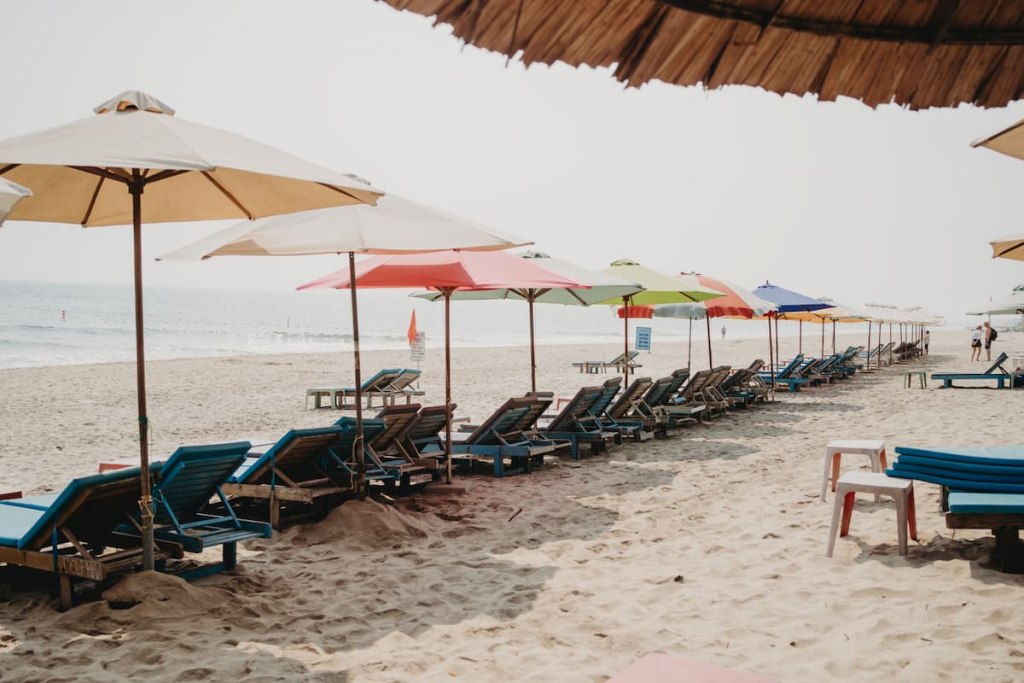
For centuries, Hoi An’s fortunes were tied to both the Thu Bồn River and the South China Sea. Merchant ships reached the town through the river system, fishermen worked the nearby coastline and coastal communities supplied food and livelihoods that supported the settlement long before tourism arrived. The beach has therefore always been part of Hoi An’s story, even if today’s visitors are more likely to associate the destination with lanterns than with the sea.
Today, An Bang offers a relaxed contrast to the energy of the Ancient Town. Its wide sandy beach, calm atmosphere, seafood restaurants and beachfront cafés provide an opportunity to slow down after a morning spent exploring historic streets and temples. Many visitors naturally settle into a rhythm that reflects the destination itself—history and culture during the cooler hours of the day, followed by an afternoon beside the ocean before returning to the Ancient Town as the lanterns begin to glow.
Unlike some of Vietnam’s most celebrated beaches, An Bang is rarely the sole reason people choose to visit Hoi An. Instead, it completes the destination. Few places in Vietnam allow visitors to wander through a UNESCO-listed historic town, enjoy one of the country’s most distinctive regional cuisines, have custom clothing made by generations of skilled tailors and unwind on a peaceful beach, all within a short distance of one another. It is this remarkable combination of experiences, rather than any single attraction, that makes Hoi An one of Vietnam’s most rewarding places to explore.
Photographing Hoi An
Hoi An is one of the most photographed destinations in Vietnam, yet many visitors leave with remarkably similar images. Lantern-lined streets, the Japanese Covered Bridge and colourful riverside reflections dominate social media, but they represent only one side of the town’s story.
The photographs that best capture Hoi An often come from slowing down and observing what happens between the landmarks. A tailor carefully measuring fabric, a boatman preparing for the evening, market vendors arranging fresh produce or the changing light across the Thu Bồn River can reveal just as much about the town as its famous attractions. Understanding the history and traditions behind these everyday moments not only enriches the experience of visiting Hoi An, but also helps create photographs that feel more authentic and more representative of the destination itself.
Photograph the Town Before the Crowds Arrive
Hoi An changes dramatically throughout the day. By late morning, many of the Ancient Town’s streets are filled with tour groups, shoppers and cyclists, while the evening brings crowds gathering beneath the famous lanterns. Both are part of Hoi An’s character, but neither tells the whole story.
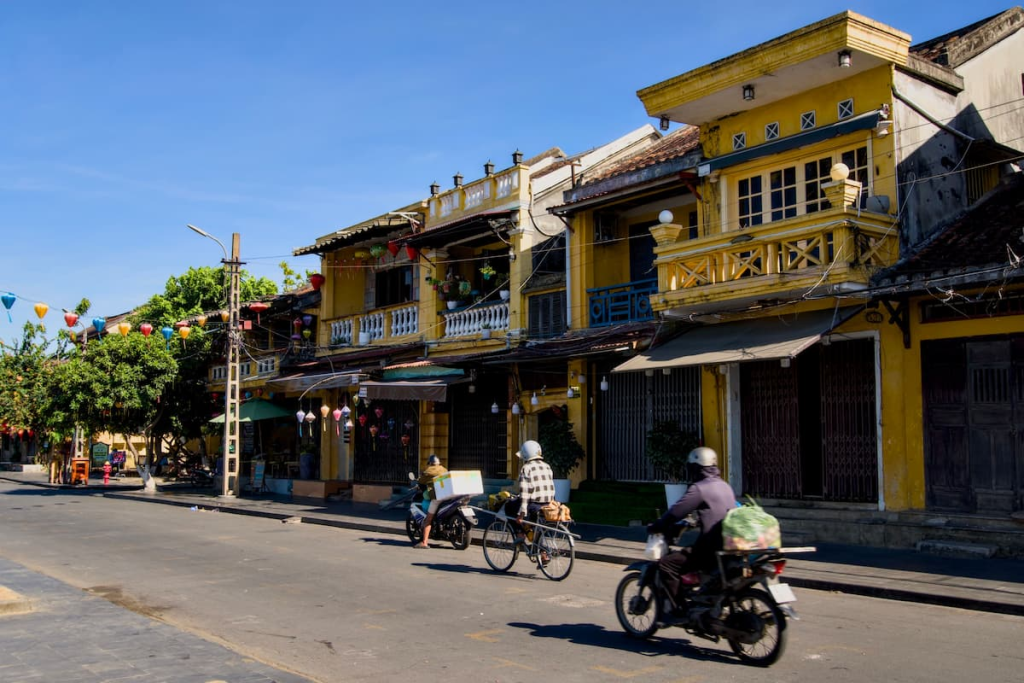
For photographers, the early morning offers a completely different perspective. Before the streets become busy, shopkeepers sweep the footpaths, market vendors prepare for the day, boats move quietly along the Thu Bồn River and soft light begins to illuminate the yellow façades of the Ancient Town. It is a quieter, more intimate side of Hoi An that many visitors never experience.
Morning light is also more forgiving than the harsh tropical sun that follows later in the day. Warm, directional light reveals the texture of weathered walls, wooden shutters and tiled roofs while creating softer portraits and more balanced street scenes. Instead of searching for dramatic moments, spend time observing the town as it gradually comes to life.
Some of Hoi An’s most memorable photographs are not taken of its landmarks at all, but of the ordinary moments that happen around them. A tailor opening their workshop, a vendor arranging fruit outside the market or a fisherman preparing a boat often tells a richer story than another photograph of an empty street. Arriving early gives you the time and space to notice these moments before the rhythm of the day changes.
Look Beyond the Lanterns
There is a reason lanterns have become the defining image of Hoi An. As evening falls, they transform the Ancient Town into one of Vietnam’s most recognisable scenes, casting warm reflections across the river and illuminating streets that have welcomed travellers for centuries. They deserve to be photographed, but they should not become the only photographs you take.
Many visitors arrive with a single image in mind—the colourful lanterns suspended above narrow streets. As a result, countless photographs of Hoi An look remarkably similar. While these images capture the town’s atmosphere, they often overlook the people, traditions and everyday moments that give the destination its character.
Instead of treating lanterns as the subject of every photograph, consider using them as part of a wider story. Frame them above a tailor carefully measuring fabric, include them in the background as market vendors close their stalls or use them to add context to a quiet conversation along the riverbank. By allowing people and daily life to become the focus, the lanterns naturally reinforce the setting rather than dominate it.
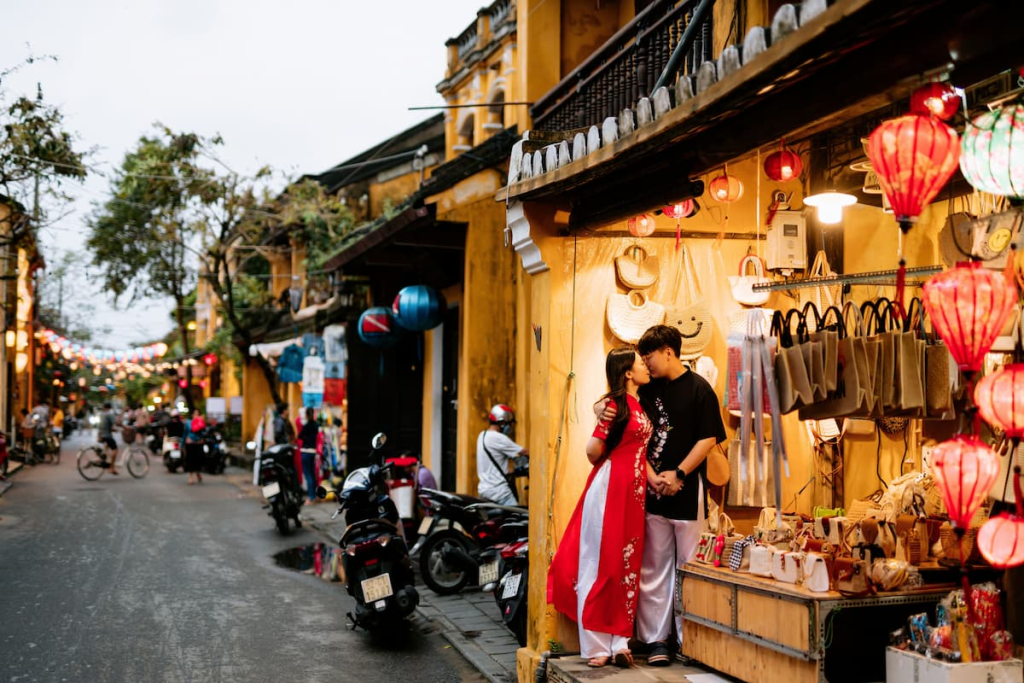
Some of the most memorable photographs in Hoi An are made by stepping just beyond the obvious viewpoint. A narrow laneway where lanterns hang above bicycles, a café owner lighting the first lanterns of the evening or a family walking home beneath their warm glow often says far more about the town than another perfectly symmetrical street scene. The lanterns are one of Hoi An’s defining symbols, but they become most powerful when they help tell the story of the people who live beneath them.
Capture the People Who Shape Hoi An
Hoi An’s architecture may draw visitors to the town, but its people give it life. Tailors open their workshops each morning, market vendors prepare fresh produce, fishermen return from the river, café owners greet familiar customers and boat operators quietly wait for the evening trade. These everyday routines reveal as much about Hoi An as its historic buildings.
Rather than searching only for posed portraits, spend time observing how people interact with the town around them. A tailor concentrating on fine details, a vendor arranging colourful fruit, incense drifting through a temple courtyard as locals stop to pray or neighbours chatting outside their homes often create photographs that feel more authentic than carefully staged scenes. These are the moments that show Hoi An as it is lived rather than simply visited.
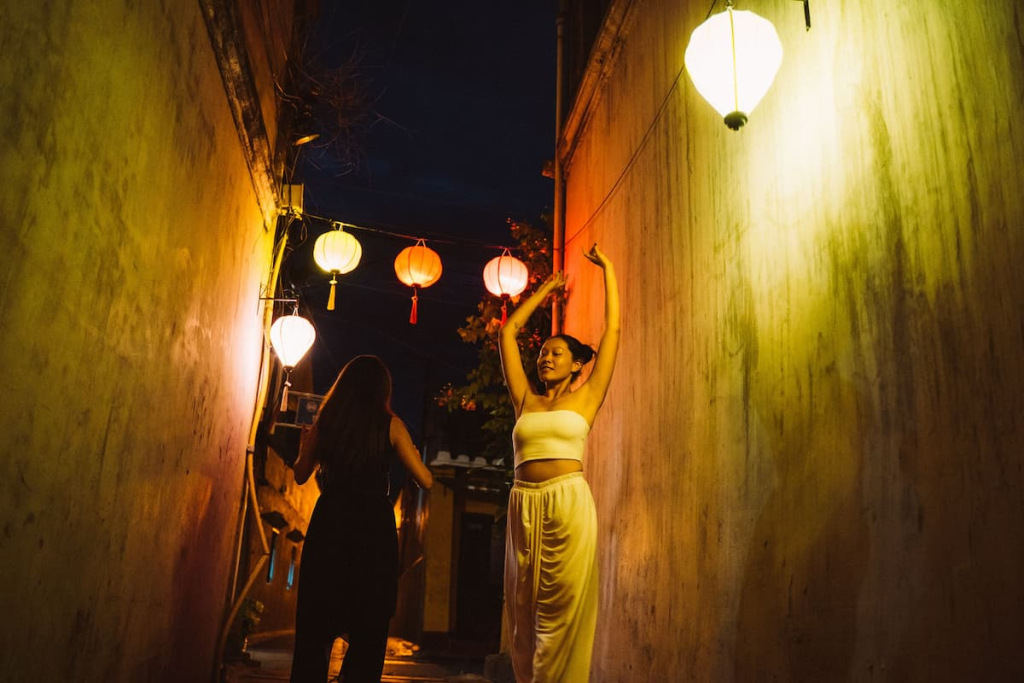
Patience is often more valuable than moving from one famous viewpoint to the next. Find a location with interesting light or activity and allow the scene to develop naturally. Instead of chasing photographs, let the photographs come to you. As people move through the frame, ordinary moments often become the images that best represent the destination.
Above all, photograph with respect. A smile, a simple greeting or asking permission when photographing someone closely can transform an interaction and often results in a more relaxed and genuine photograph. The goal is not simply to take pictures of people, but to capture the rhythm of everyday life that continues beneath Hoi An’s centuries-old streets. Those human moments are often the photographs that visitors remember long after the lanterns, landmarks and architecture have faded from memory.
Use the Thu Bồn River to Tell the Story
The Thu Bồn River is far more than a scenic backdrop to Hoi An. It is the reason the town exists. For centuries it carried merchant ships from the sea, connected Hoi An with inland communities and helped transform a small settlement into one of Southeast Asia’s most important trading ports. Every photograph that includes the river is, in some way, telling part of that history.
Many visitors naturally gravitate towards the waterfront in the evening, when lanterns reflect across the water and traditional boats drift past the Ancient Town. These scenes are beautiful, but the river offers different opportunities throughout the day. Early morning reveals fishermen preparing their boats, locals crossing the river before work and the town gradually waking beside the water. During the afternoon, changing light creates reflections that emphasise Hoi An’s distinctive architecture without relying solely on the evening glow.
Rather than photographing the river as an isolated landscape, look for the relationship between people and the water. A boatman securing his vessel, traders unloading supplies, visitors quietly watching the current or riverside cafés beginning to fill all help illustrate how the river continues to shape daily life. These photographs connect the destination’s history with the present, showing that the river remains an active part of the town rather than simply a picturesque setting.
Some of Hoi An’s strongest photographs are created by recognising that the river is the thread linking everything together. It connects the Ancient Town with the sea, reflects the lanterns that have become its symbol and continues to influence the rhythm of everyday life. When the river becomes part of the story rather than simply the foreground, photographs begin to capture not only what Hoi An looks like, but why it developed where it did.
Photograph the Details That Tell the Story
Some of Hoi An’s most meaningful photographs are not of famous landmarks at all. They are found in the details that many visitors pass without noticing—a weathered wooden doorway polished smooth by generations of hands, faded French shutters catching the morning light, incense curling through a temple courtyard or colourful fishing nets drying beside the river. Individually these moments may seem ordinary, but together they reveal the character of the town.
As you explore Hoi An, slow your pace and look beyond the obvious subjects. Notice the textures of ageing walls, handwritten shop signs, baskets of fresh herbs at the market, bicycles leaning against centuries-old buildings or the careful craftsmanship of lanterns being assembled by hand. These quieter scenes often communicate a stronger sense of place than another wide photograph of a busy street.
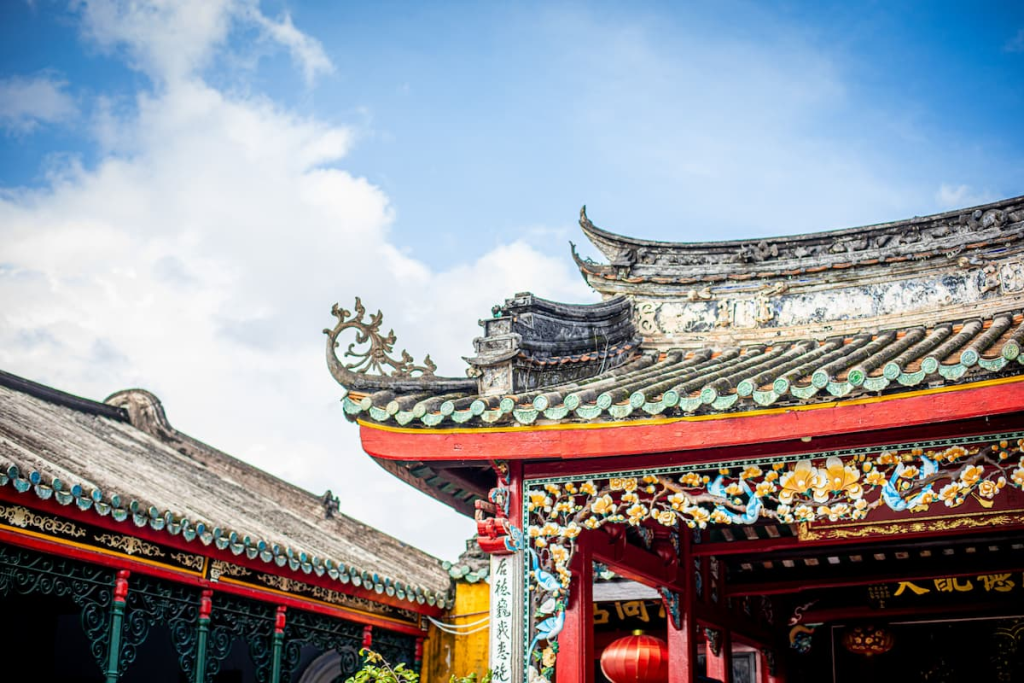
Details also help tell stories that larger scenes cannot. A tailor’s measuring tape draped across a workbench hints at generations of craftsmanship. A steaming bowl of cao lầu prepared in a small family restaurant speaks to local traditions that have endured for centuries. The worn timber of a riverside boat reflects the daily relationship between Hoi An and the Thu Bồn River. These are the small observations that add depth to a photographic collection and help viewers understand the destination beyond its landmarks.
When you return home, these photographs often become some of the most rewarding. While iconic scenes remind you where you travelled, the smaller details remind you how the place felt. Together they create a richer, more complete story of Hoi An—one built not only from its famous sights, but from the everyday moments that give the town its enduring character.
Leaving Hoi An
Long after you’ve left Hoi An, it probably won’t be a single landmark that stays with you.
You’ll remember the quiet streets before the crowds arrived. The sound of bicycles rolling across worn stone lanes. A tailor carefully measuring fabric before disappearing into a workshop where generations have practised the same craft. The scent of incense drifting from an old temple, boats moving slowly along the Thu Bồn River and lanterns beginning to glow as daylight fades into evening.
These moments are not separate experiences. Together they tell the story of a town shaped by trade, culture and everyday life over hundreds of years. The history explains the architecture, the river explains the town, the traditions explain the food and the people continue to give Hoi An its character every day.
That is perhaps what makes Hoi An so memorable. It is not simply beautiful; it is understandable. The more time you spend observing its streets, its traditions and the rhythm of daily life, the more the destination begins to reveal itself. By the time you leave, you are taking home more than photographs—you are taking with you a deeper understanding of why this small riverside town has remained one of Vietnam’s most enduring destinations.
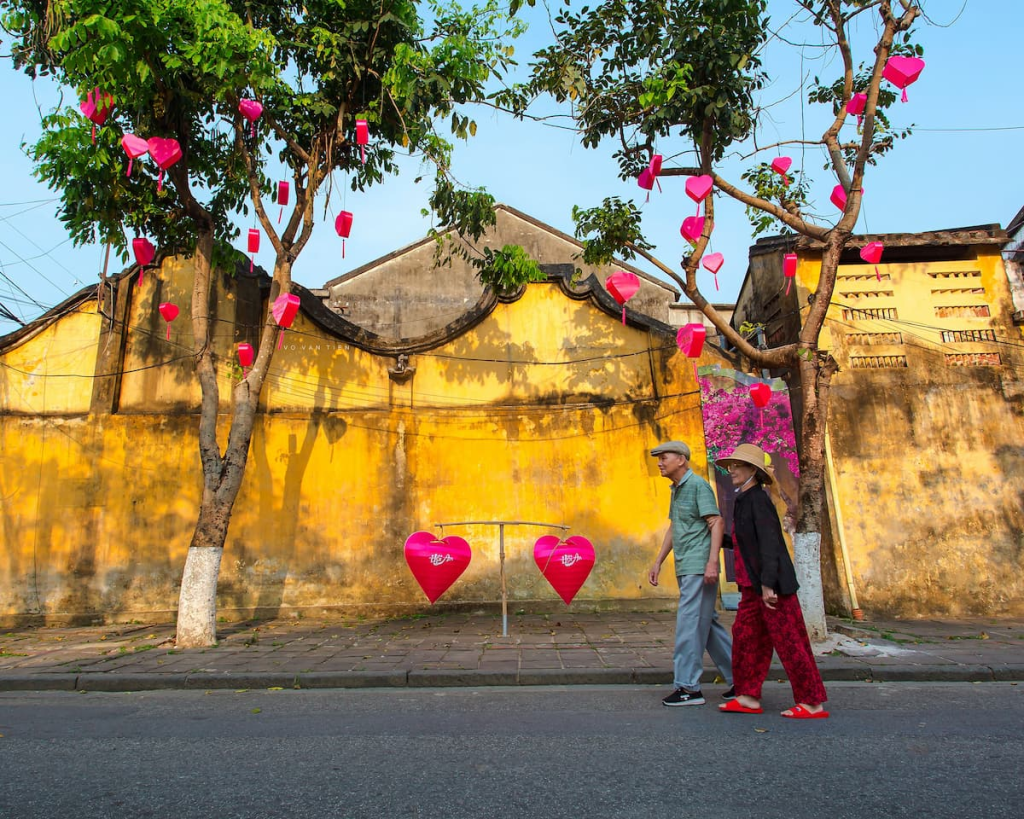
Like every remarkable place, Hoi An has two stories. There is the one that first draws visitors here—the lanterns, the tailoring, the riverside cafés and the historic streets. Then there is the quieter story discovered by those who slow down long enough to notice it. That second story is often the one people remember most.
Perhaps that is the greatest reward of travel. Not simply collecting destinations, but learning to see them more completely before moving on to the next.
Continue Exploring
Hoi An is only one chapter of Vietnam’s story. Beyond its lantern-lit streets lie imperial cities, dramatic mountain passes, fishing villages and coastlines that reveal different sides of the country’s history and culture.
Continue your journey with more destination guides, travel photography and stories from across Vietnam and Southeast Asia as you explore the places, people and everyday moments that make each destination unique.
- Explore more destinations in Vietnam
- Discover thoughtful Travel Photography
- Return to the Undivided Journal homepage
- Find Hoi An Tours & Experiences
Frequently Asked Questions: eXPLORING hOI aN
Is Hoi An worth visiting?
Yes. Hoi An combines centuries of history, well-preserved architecture, exceptional local cuisine, traditional craftsmanship and a relaxed riverside atmosphere in a compact, walkable destination. Its character extends well beyond its famous lantern-lit streets.
Why is Hoi An famous?
Hoi An is best known for its UNESCO-listed Ancient Town, colourful lanterns, custom tailoring and distinctive local dishes such as cao lầu. Its history as one of Southeast Asia’s most important trading ports shaped much of the town visitors experience today.
How many days should you spend in Hoi An?
Most visitors find that two to four days allows enough time to experience the Ancient Town, enjoy the local food, visit nearby An Bang Beach and appreciate the slower rhythm of everyday life that makes Hoi An unique.
What is the best time of day to explore Hoi An?
Early morning offers the quietest streets, softer light and a chance to see local life before the town becomes busy. Evening brings lanterns, riverside reflections and a lively atmosphere, making both times worthwhile for different reasons.
Is Hoi An good for photography?
Hoi An is one of Vietnam’s most rewarding destinations for travel photography. While the lanterns are its most recognisable subject, many of the strongest photographs come from observing everyday life, traditional trades, riverside activity and the town’s smaller details.
Why are there so many tailor shops in Hoi An?
Hoi An developed as a major trading port where textiles from across Asia arrived for centuries. Over generations, tailoring became one of the town’s defining crafts, creating the reputation that continues to attract visitors today.
What makes Hoi An different from other destinations in Vietnam?
Rather than being known for a single attraction, Hoi An combines history, culture, food, craftsmanship and coastal living within a compact area. Its greatest appeal lies in how these elements work together to create a destination with a strong sense of place.
About the Author
Anthony Hibbins is a travel writer and photographer who explores the history, culture and everyday life of destinations across Southeast Asia. Through Undivided Journal, he looks beyond famous landmarks to uncover the people, traditions and stories that give each place its character.
His work combines thoughtful travel writing with documentary-style photography, encouraging readers to slow down, observe more carefully and develop a deeper understanding of the places they visit.