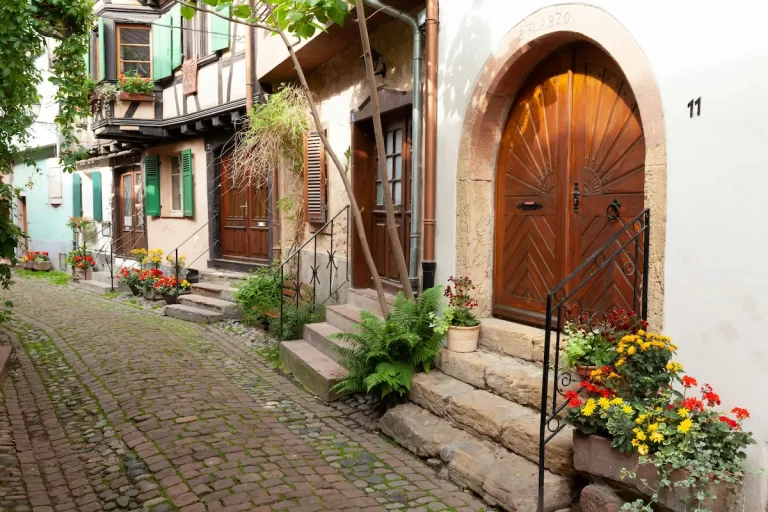

Learning a Place by Staying Put
Most travel days are structured around movement. Check-out times, transport schedules, arrivals, departures. Even when nothing goes wrong, the day feels shaped by getting from one place to another.
Staying somewhere longer changes that structure. Once movement stops being the main task, other things take its place: routine, repetition, waiting, small decisions that are no longer framed as temporary. Days begin to resemble each other. Familiarity sets in.
This is usually the point where people feel they have “seen” enough and move on. Geographer Yi-Fu Tuan wrote about how space becomes place through experience in Space and Place: The Perspective of Experience (see this scanned version on Archive.org). This helps explain why staying somewhere — not just passing through — changes what you notice about it.But it is also the point where a place begins to show how it actually works — when a sense of place starts to form through exposure rather than impression.
Learning a place by staying put is less about insight and more about exposure. What follows is not an argument for moving slowly, but an examination of what becomes visible once novelty wears off and ordinary life takes over.
The limits of first impressions
The first days in a new place are often the most vivid. Everything feels heightened — sound, movement, colour, temperature. Even minor details register because nothing has yet settled into the background. A short walk can feel full simply because it is unfamiliar.
This intensity is often mistaken for understanding.
Early impressions are shaped almost entirely by contrast. You measure what you see against where you came from, against what you expected, against whatever place you were in most recently. A street feels chaotic because you do not yet know its rhythm. A neighbourhood feels quiet because you arrived during the wrong hours. A city feels welcoming or hostile based on a handful of interactions that say more about timing than character.
These impressions feel confident, but they are provisional.
The problem is not that first impressions are wrong. It’s that they are incomplete. They describe how a place presents itself to newcomers, not how it functions once you are no longer new.
A sense of place does not form at this stage. It begins only once those early impressions lose their urgency.
That shift happens quietly. You stop narrating everything internally. You stop comparing each moment to something else. Instead of asking what is different here, you begin to notice what is consistent.
Familiarity changes what you notice
Once basic logistics become automatic — where to buy food, how to get around, which routes make sense — mental space opens up. Attention shifts outward.
You notice how mornings differ from afternoons. Which streets stay quiet. Where people pause rather than pass through. Which businesses survive without visibility. These details rarely stand out to someone passing through quickly.
Repetition is usually framed as something to avoid in travel. Doing the same thing twice feels inefficient when time is limited and the environment is unfamiliar. Variety is treated as proof of progress.
But repetition is how places are learned.
The first time you walk a street, most of your attention is spent orienting yourself. The street exists as a sequence of instructions rather than a space. By the third or fourth pass, navigation fades into the background. Attention shifts outward. What repeats becomes visible. Then, gradually, what changes.
Buying the same food from the same place reveals patterns that novelty hides. You learn which days are busy without asking. You notice when something is missing. You recognise subtle adjustments — smaller portions, longer waits, different moods — that signal shifts in supply, weather, or routine.
None of this announces itself. It only becomes visible through return.
Repetition replaces drama with context. What once felt chaotic begins to show structure. What once felt charming begins to show cost. What once felt inconvenient begins to make sense.
It also reveals how you change. Your routes simplify. Your expectations adjust. You stop choosing experiences and start responding to conditions. This is not resignation; it is alignment.
Becoming part of the background
There is a point, usually unmarked, when you stop being noticed.
You pass through the same spaces often enough that your presence no longer interrupts them. You are no longer processed as new information.
At first, this can feel like a loss. When you arrive somewhere unfamiliar, attention flows easily. People explain things. Interactions feel padded with patience. Novelty creates participation.
But novelty fades.
Staying long enough reverses the relationship. Transactions become efficient rather than friendly. Interactions shorten. You are expected to keep up.
This social invisibility is one of the clearest signals that a sense of place is forming.
When you are no longer an event, behaviour around you becomes less performative. People stop adjusting for you. They stop offering context. You begin to see how things function when no one is explaining themselves.
This changes what you are able to observe — and how you move. You hesitate less. You respond rather than evaluate. Your behaviour begins to mirror the rhythms around you, not consciously, but practically.
This is not assimilation. It is calibration.
When familiarity flattens perception
There is a limit to what invisibility offers.
As explanations disappear, blind spots can form. You may stop questioning routines that deserve attention. You may mistake efficiency for neutrality, or silence for indifference. Familiarity risks becoming complacency.
A sense of place depends on attentiveness, not just duration. Staying longer does not guarantee deeper understanding if awareness dulls alongside novelty.
Familiarity must be held lightly.
When structure prevents a sense of place
Not all places reveal themselves through time alone. Some are structured in ways that limit what familiarity can expose.
Highly managed environments prioritise efficiency, clarity, and throughput. Movement is directed. Choices are anticipated. Confusion is designed out. These systems work well for short stays, but they also reduce the number of variables a person is exposed to over time.
When routes are fixed and interactions scripted, repetition produces less information. Days repeat without accumulating context. The environment remains legible but shallow.
This is not a failure of attention. It is a feature of design.
In these places, you can stay longer without learning much more. Familiarity increases comfort, but not understanding. You know where to go, but not how things adapt under pressure. You recognise surfaces, but not priorities.
A sense of place struggles to form when variation is actively minimised.
The opposite is also true. Places with loosely defined systems — informal schedules, overlapping uses, inconsistent rules — often reveal more over time. Friction is not smoothed away. Small disruptions ripple outward. Repetition exposes adjustment rather than sameness.
These environments can feel inefficient or confusing at first. Over time, they become instructive.
This distinction matters because it reframes expectation. If a place does not deepen with familiarity, it is not necessarily because you are missing something. It may be because the environment is designed to behave consistently regardless of who is present.
Understanding this prevents misattribution. You stop blaming yourself for not “getting it” and instead recognise the limits imposed by structure. A sense of place depends not just on duration, but on how much the place is allowed to respond to conditions.
The illusion of familiarity
Not all familiarity leads to understanding.
Some routines create the appearance of depth without changing what is actually known. You return to the same cafés, walk the same streets, interact with the same surfaces of daily life — but nothing new is revealed. The environment feels comfortable, yet remains opaque.
This is familiarity without exposure.
It often occurs when repetition is self-selected rather than imposed. You choose routes that feel easy. You return to places that already make sense. Friction is avoided rather than encountered. Over time, this produces stability, but not insight.
The days feel settled, but narrow.
A sense of place requires contact with inconvenience. Not constantly, and not dramatically — but regularly enough to expose how the environment responds when things do not go smoothly. Where delays accumulate. How priorities shift under pressure. Which systems bend and which break.
Without this contact, familiarity becomes enclosure. The place feels known because it no longer surprises you, not because you understand it.
This is why some long stays remain shallow. Duration alone does not guarantee depth. What matters is whether repetition continues to introduce variation, or merely reinforces preference — a distinction that becomes clearer when returning to the same place without learning anything new.
Recognising this distinction sharpens attention. You begin to notice when comfort is replacing curiosity. When routine is insulating rather than revealing. When familiarity is reducing exposure instead of increasing it.
A sense of place depends on staying responsive to these signals. Not by seeking novelty, but by allowing friction to remain visible. Depth forms where repetition continues to test assumptions rather than confirm them.
Unremarkable days
Some days offer no story at all. You run errands. You wait. You repeat yesterday with minor variations.
These days are often dismissed as wasted, but they reveal how places are actually lived — especially once a city stops feeling new and daily patterns replace intention.
Over time, these uneventful days recalibrate expectation. You stop measuring value by distinct moments and begin to recognise continuity as meaningful. The place becomes the setting within which significance occasionally appears, rather than something you move through searching for it.
Adjusting rather than arriving
Understanding a place rarely arrives as clarity. What changes instead is how you respond to uncertainty.
You learn which delays are normal. Which problems correct themselves. Which frictions require adjustment. These shifts are practical rather than intellectual.
You plan less tightly. You leave more space between decisions. You act without full information, trusting that patterns will reveal themselves through repetition rather than explanation.
A sense of place forms here — not through mastery, but through responsiveness. The place remains partially unknown, but your relationship to that uncertainty changes.
Allowing contradiction
Places are not consistent. They behave differently depending on time, weather, pressure, and who is present.
Staying long enough exposes these contradictions. What felt calm becomes chaotic. What seemed hostile becomes kind. What looked inefficient reveals a different logic.
A sense of place does not resolve these contradictions. It allows them to exist without needing to be explained away.
What changes is not the place, but your judgement. You stop looking for a single interpretation and begin to recognise patterns of behaviour under specific conditions. The place becomes a set of responses rather than an idea.
Memory shaped by routine
Longer stays produce different memories. Instead of highlights, memory attaches to rhythm — a repeated walk, a familiar pause, the way light falls at a certain hour. This kind of recall depends on observing the small details of local life that only become visible through routine.
These memories are quieter, but more durable. They carry atmosphere rather than spectacle.
Because routine repeats, memory has something to hold onto. The place is recalled through pace and weight rather than narrative.
Why staying put matters
Travel that prioritises movement values coverage over exposure. Staying challenges that logic.
By remaining in one place, you experience constraints you did not choose. From that exposure, a sense of place emerges — incomplete, personal, and honest.
Not something you pass through.
Something you briefly live within.